Full Body Thermography
Full Body Thermography
Comprehensive Imaging for Whole-Body Wellness
Full Body Thermography captures detailed images of surface temperature patterns from head to toe, providing a broad view of thermal variations across multiple regions of the body. Using advanced, medical-grade infrared technology, this non-invasive imaging offers additional information about patterns of vascular activity and physiological changes.
Each examination undergoes a comprehensive three-level interpretation process by board-certified thermologists, providing a detailed report of the observed thermal patterns.
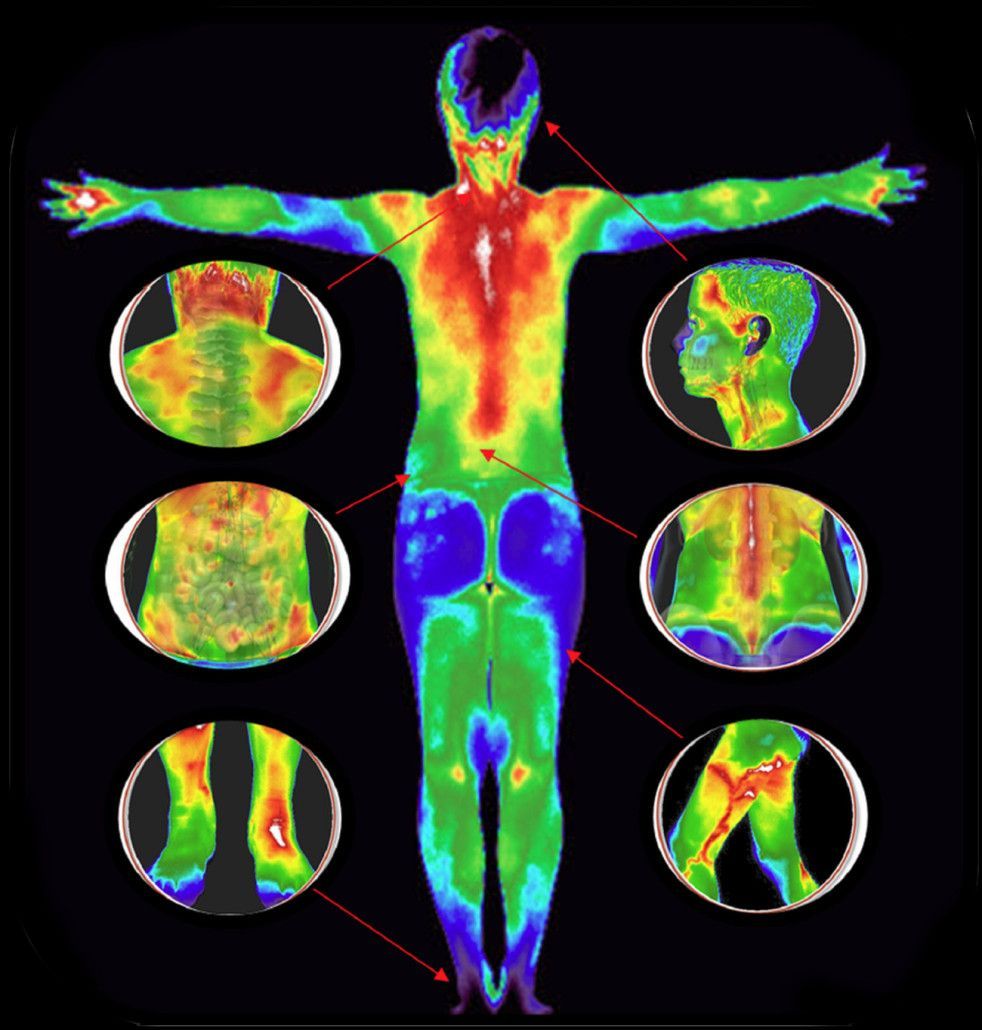
What a Full Body Thermography Includes
A full body scan includes imaging of the head, neck, chest, breasts, abdomen, back, arms, legs, and testicular screening for men. Thermography can help assess:
- Breast health
- Thyroid function
- Oral inflammation
- Peripheral vascular disorders
- Circulatory & vascular irregularities
- Inflammatory conditions
- Neuromuscular conditions
- Metabolic imbalances
- Lymphatic system function
Thermography does not diagnose conditions directly, but it highlights patterns that may warrant further evaluation or proactive care.
Why Choose Full Body Thermography?
- Non-invasive imaging – no radiation, no compression, no contact
- Detailed thermal imaging – captures surface temperature variations across multiple regions
- Whole-body perspective – provides a broader view of thermal patterns throughout the body
- Ongoing comparison – observe changes in thermal patterns overtime
Imaging Details
- Includes 30 images of the head, neck, thyroid region, chest, breasts, abdomen, back, arms, legs, and a testicular screening for men
- Performed in a comfortable, private setting
- Interpreted by a three levels of review by board certified thermologists.
Deep Vein Thrombosis
Deep vein thrombosis (DVT) occurs when a blood clot forms in one or more of the deep veins in the body, usually occurring in the legs. DVT can cause leg pain or swelling but also can occur with no symptoms. DVT can be very serious, if undetected, blood clots in the veins can break loose, travel through the bloodstream and lodge in the lungs, blocking blood flow (pulmonary embolism).
Early detection of DVT is critical to prevent a pulmonary embolism. However, most conventional methods for diagnosing DVT are functionally limited and complicated.
Thermography is an effective screening tool for DVT due to its convenience, rapid response, and high sensitivity.
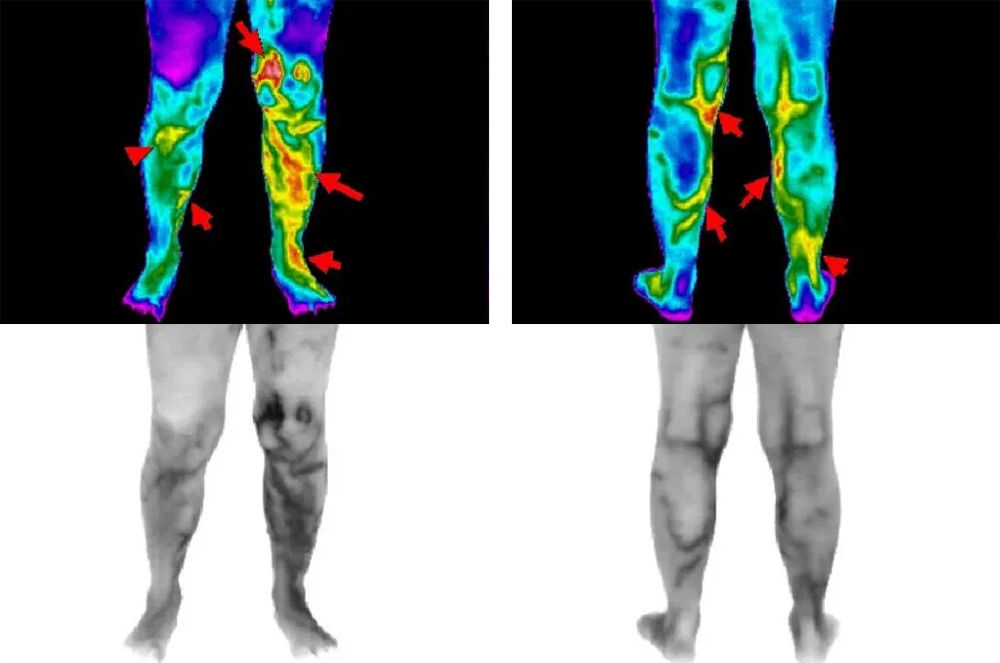
DVT Viewed in Left Leg Indicated by Increased Varicosities
Gout
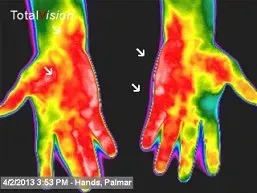
Gout is a common and complex form of arthritis, caused by inflammation. It is characterized by sudden, severe attacks of pain, swelling, redness and tenderness in the joints, often found in the joint at the base of the big toe.
Measurement of skin temperature is utilized to assess localized or regional inflammation. Thermography has been found to be a valuable aid, being both precise and accurate.
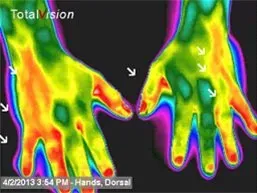
Gout in Hands
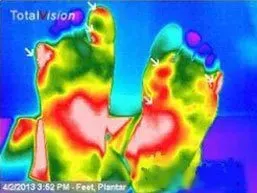
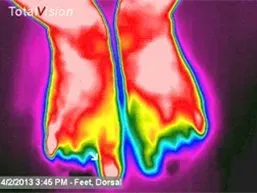
Gout in Feet
Thoracic Outlet Syndrome
Thoracic outlet syndrome (TOS) is a condition whereby symptoms are produced from compression of nerves or blood vessels, or both, because of an inadequate passageway through an area between the base of the neck and the upper chest area known as the thoracic outlet. This compression can cause pain in the shoulders, neck, arms or hands. The impaired circulation to the extremities causes discoloration, numbness and tingling in the fingers.
Common causes of TOS include repetitive injuries such as sports-related activities, physical trauma or certain structural abnormalities.
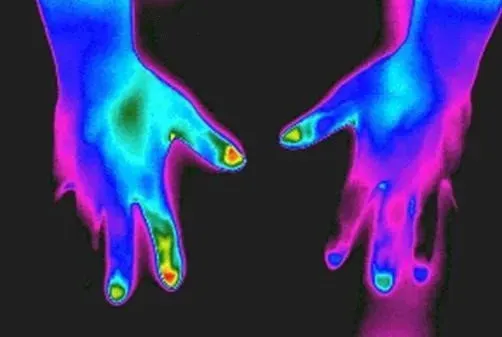
Thoracic Outlet Syndrome Seen as Missing Fingers
Take the Next Step
A Broader View of Your Body's Thermal Patterns
A Full Body Thermography provides a broad view of thermal patterns across multiple regions of the body, offering additional information to support a better understanding of your health.
At CT Thermography we're here to help you make proactive, informed choices for your ongoing wellness.
Full Body Thermography – $575
Full Body Thermography includes 30 images covering the head, neck, thyroid region, breasts or chest, abdomen, upper and lower back, and all extremities, including a testicular screening for men.